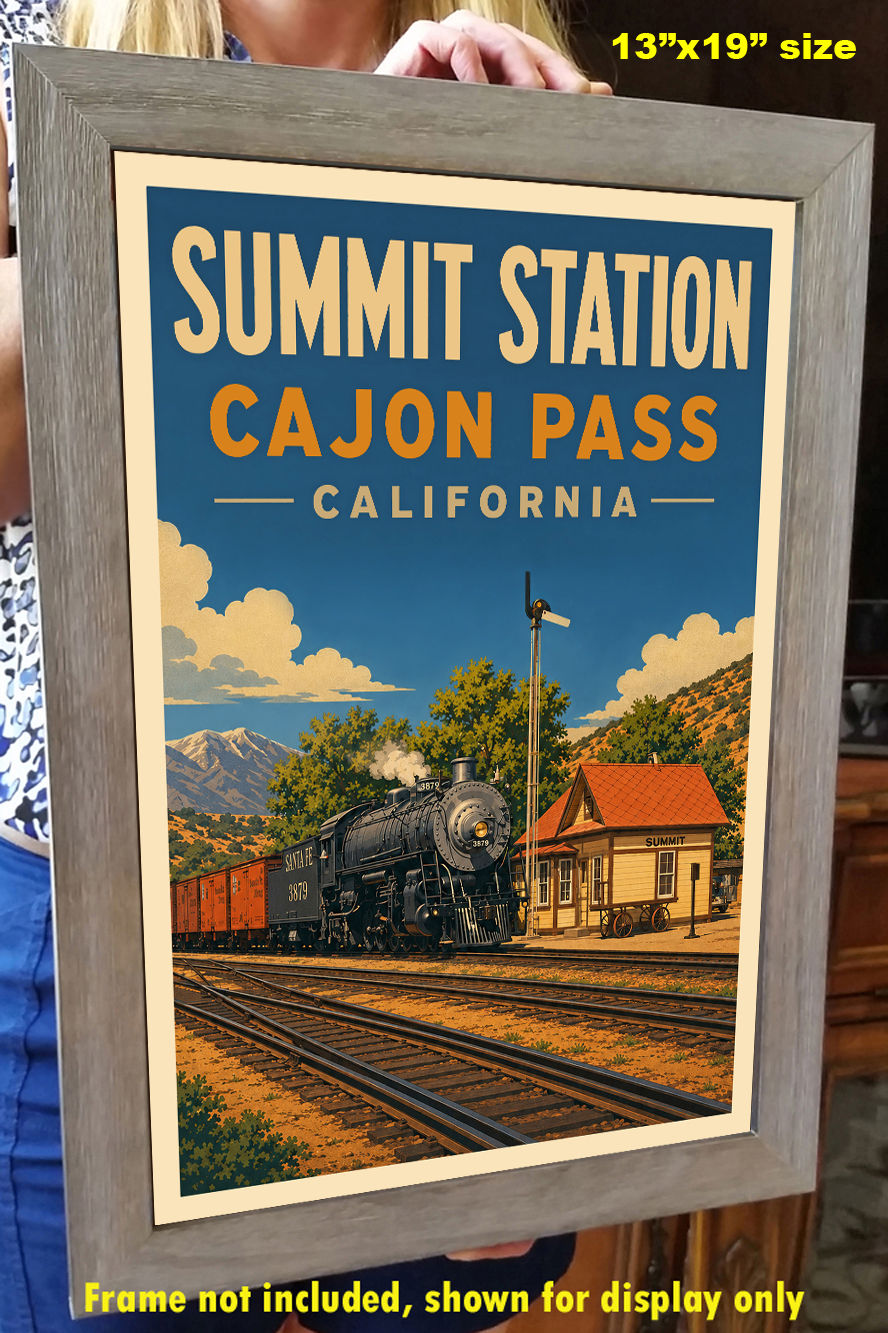
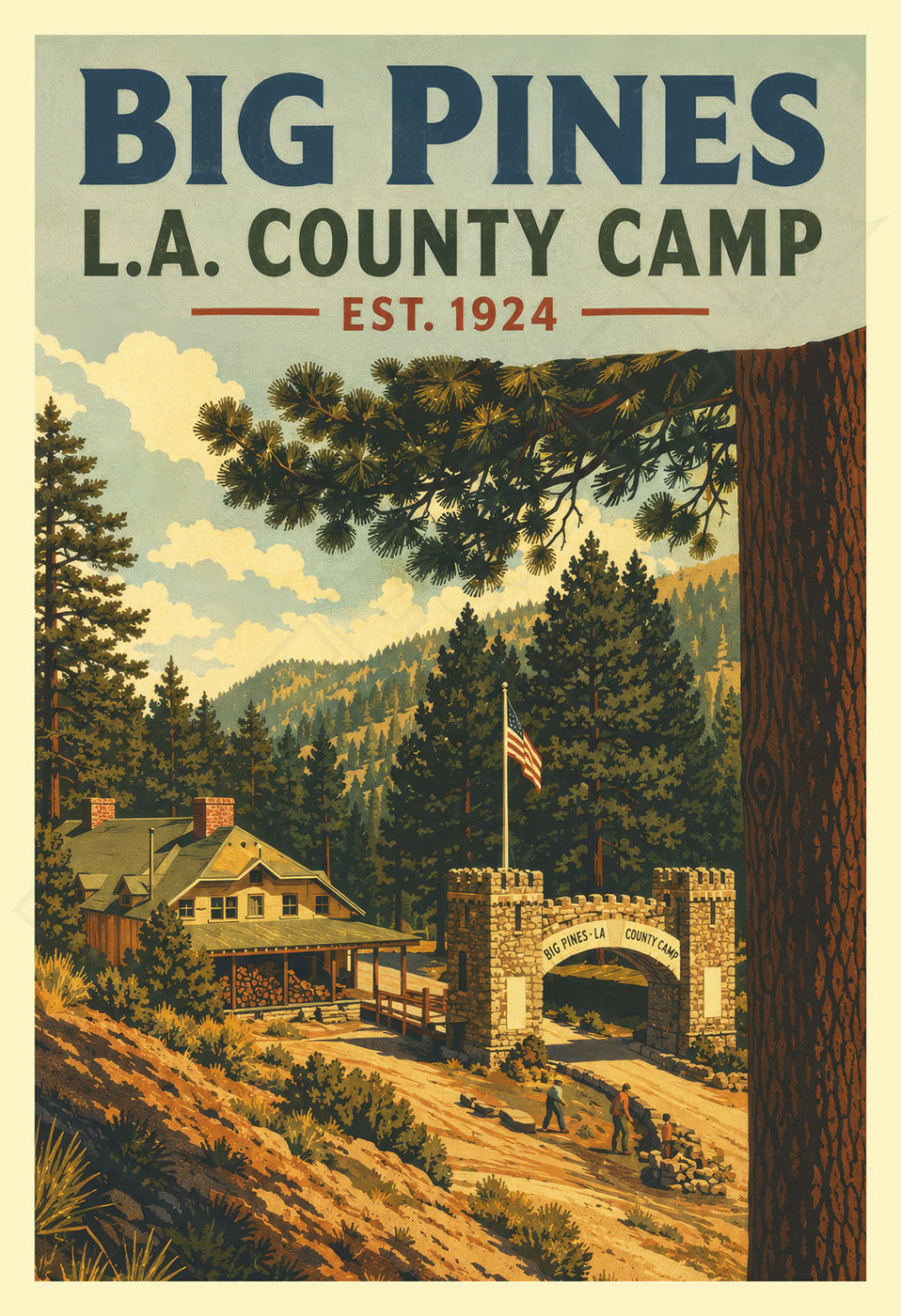
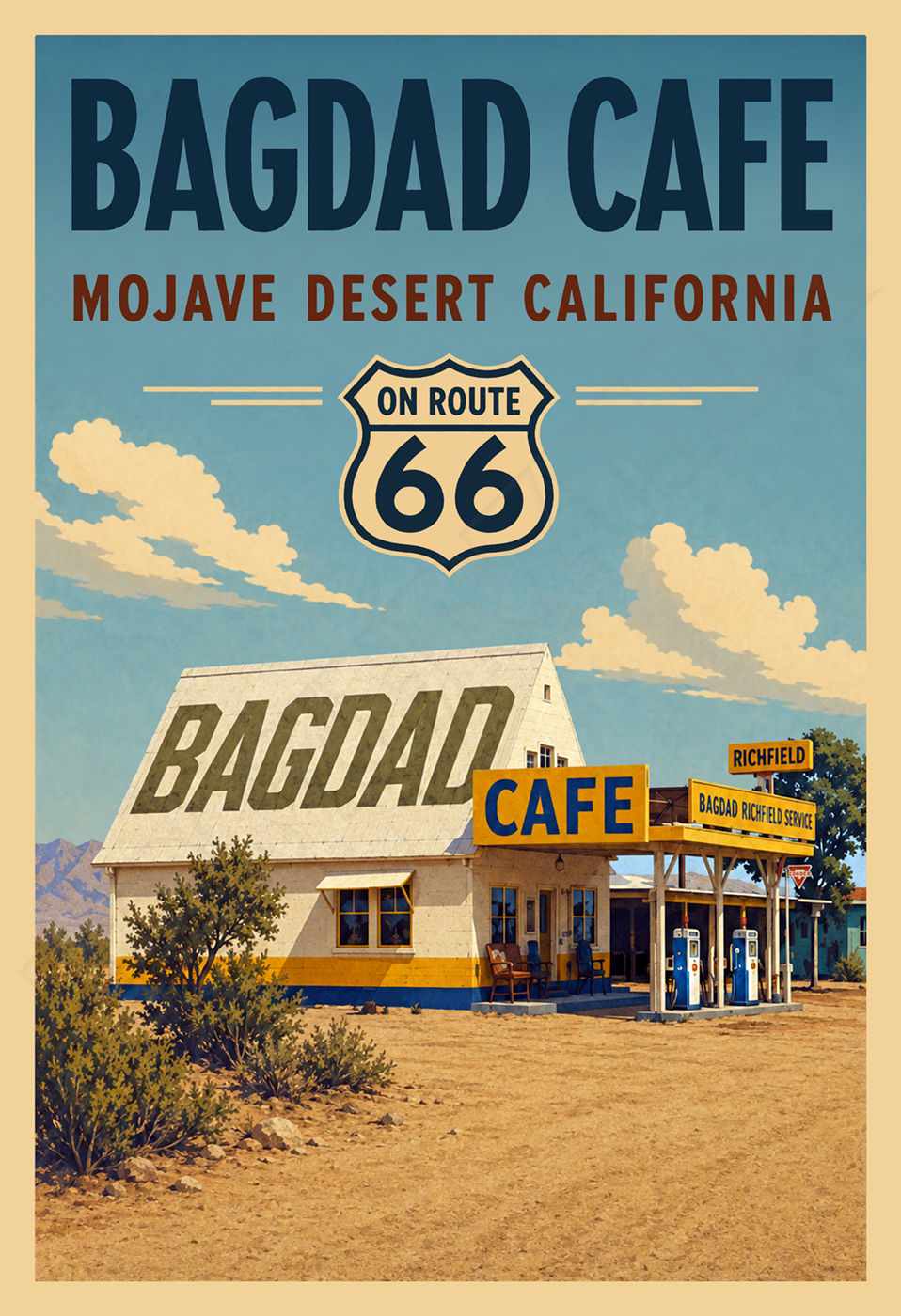
These are simply the best posters available! You will be thrilled with the image quality, vivid colors, fine paper, and unique subjects. This art was created from a historic image and has been transformed into a beautiful poster - available exclusively from Posterzilla.
OUR POSTERS ARE SIZED FOR STANDARD OFF-THE-SHELF FRAMES, WITH NO CUSTOM FRAMING REQUIRED, PROVIDING HUGE COST SAVINGS!
This beautiful poster has been re-mastered from an original image of Camp Cajon, the famous rest stop on National Old Trails Road and Route 66, in the heart of the Cajon Pass of Southern California. The camp was founded in 1919 by William M. Bristol. The poster was created in the distinctive WPA style of the 1930s.
The vibrant colors and detail of these classic images have been painstakingly brought back to life to preserve a great piece of history.
The 13"x19" format is an excellent image size that looks great as a stand-alone piece of art, or grouped as a visual statement. These posters require no cutting, trimming, or custom sizing, and a wide variety of these frames are readily available at your local craft or hobby retailer, and online.
A great vintage print for your home, shop, or business!
Camp Cajon History
Camp Cajon was built on National Old Trails Road, the United States’ first “Ocean to Ocean Highway,” opened in 1913 to serve the newly motorized American population. National Old Trails Road became U.S. Route 66 in 1926, and Camp Cajon became known across the country as “The Gateway to Southern California.”
Camp Cajon was conceived in 1917 by William Bristol, a well-known local orange grower, author, poet, and community leader. Bristol believed the location of Camp Cajon would be an ideal spot for motorists to rest and recuperate from their difficult trip across the Mojave Desert.
William Bristol was a skilled stone mason, and he created a unique style for the heavy rock and concrete facilities at Camp Cajon. He came up with an idea to have sponsors supply items such as picnic tables, stoves, and barbeque pits. Each sponsor paid to have a cast-iron tablet with a promotional inscription of their choice placed on their donation.
Organizations like the Santa Fe Railroad, the Elks Club, and the Mission Inn in Riverside, built unique stone outpost structures on the hillside to the east of Camp Cajon. The busy main highway into Southern California was now closely flanked on both sides by Camp Cajon.
The Great Flood of 1938 severely damaged the facilities at Camp Cajon, as well as homes, businesses, and infrastructure throughout the region. Faced with the cost of rebuilding the camp and the urgent need to widen Route 66, county and road officials decided to close and abandon Camp Cajon.
43 of Camp Cajon’s iconic concrete picnic tables were salvaged and relocated to Lytle Creek and Perris Hill Parks, in San Bernardino. The tables at Lytle Creek Park are still in use today.
Route 66 was realigned, and Camp Cajon was nearly forgotten. Interstate 15 bypassed Route 66 in 1969, and the original site of Camp Cajon now exists as an empty field on Wagon Train Road, approximately 200’ northwest of the rebuilt Camp Cajon Monument.